Home Jazz Latin Jazz Children World Various Email

Vishtèn's Story - A Musical Tale of Two Islands

(Available in US only) In the North Atlantic Ocean, in the Gulf of Saint Lawrence off of Canada's east coast, lays tiny Prince Edward Island and nearby, the even smaller archipelago known as the Magdalen Islands (les Îles de la Madeleine). In addition to being connected today by a ferryboat, both Islands have a shared history and a shared cultural tie that dates back several centuries.

This cultural tie tells a story of early French Acadian settlers seeking a better life in the new world. In their quest to survive, many of these settlers eventually became fishermen and carried with them their musical traditions as a means of celebrating their survival. There still exists today a small enclave in Prince Edward Island where the French culture is predominant while the Magdalen Islands still remains primarily French.

There has been a musical connection between these two places for centuries, traded back and forth through trips made on fishing boats in the old days and marriages among the French people which have taken place over the years. A musical marriage that embodies the spirit and the sound of this connection in the present is the contemporary Acadian traditional group Vishtèn.

Today the four members who make up Vishtèn, Pastelle and Emmanuelle LeBlanc, Pascal Miousse and newest member Louis-Charles Vigneau, have become a distinctive and powerful international voice for traditional music from this part of the world.

Twin sisters Pastelle and Emmanuelle LeBlanc were raised on Prince Edward Island and grew up in a household where fiddle music was commonplace. Their musical parents opened their home night after night to local and traveling fiddlers and musical jams into the wee hours were a regular occurrence.

Soon the young sisters were becoming accomplished step dancers and learning the fundamentals of music on the piano. All the while they had the opportunity to listen to and experience the fiddlers and accompanists of their parent's generation. One of the best of these was Bertrand Deraspe, a fiddler from the Magdalen Islands. His style of play was (and still is) decidedly French Acadian in its syncopated lilt and use of foot percussion accompaniment. This style had a strong resemblance to other local fiddlers from their area of Prince Edward Island, fiddlers such as Louise Arsenault who was also a regular musical guest at the house.

It wasn't long before the sisters realized that there were other young people in their community who had also begun to value this music. They began to jam with one another and soon formed a band of peers calling it Celtitude later changed to Vishtèn.

Here is where the journey had its origin and the quest for a distinctive musical identity began. Pastelle's early piano training proved useful in making the transition to accordion and Emmanuelle soon discovered a flare for playing penny whistle and bodhràn. Their voices had also matured and the sweetness and smoothness of sibling harmonies was soon added to the mix.

Growing up on the Magdalen Islands fiddler Pascal Miousse was also influenced by his father's connection to music. Pascal's father was a guitarist who loved fiddle music and the socializing that ensued whenever the fiddle came out. He inspired Pascal to take up the fiddle at the age of five. It wasn't long before he was playing for his father's friends, being awakened at three AM to play at the party after the dance, which had suddenly materialized in the kitchen of his home.

Pascal developed rapidly and soon broadened his musical scope to include the guitar, mandolin and bass. With a couple of friends from the Magdalen Islands he too formed a band and toured for 10 years, playing mostly rock music with a fiddle tune thrown in once in a while, lest he not forget his roots.

As that collaboration was ending, a chance encounter on the street one day with Pastelle caused him to re-enter the world of traditional music. It seemed that Vishtèn had just lost its fiddler and was in dire need of a stylistically French fiddler. Of course it definitely helped that he also sang and played everything else, and most importantly understood what the band was about thanks to his childhood roots. He and his style of play have become a musical anchor of Vishtèn's sound giving it a distinctive voice within the broader Celtic genre.

Ironically, newest member Louis-Charles Vigneau also grew up on the Magdalen Islands but only knew of Pascal, met the twins for the first time in Louisiana, became a brief member of the early incarnation of the band for just 6 months and then only after an intensive 5 year personal musical journey has recently rejoined to complete the evolution of the ensemble.

Like the others he too was fortunate to have music in the home. His mother is the accomplished singer/instrumentalist Carole Painchaud, who has always had a traditional band of some sort on the go. It was through her that he first met guitarist Patrice Deraspe (Bertrand Deraspe's brother) who inspired in him the desire to seek out the many possibilities on the guitar as it applies to fiddle music and traditional songs.

During his 5 years away from the band he honed his craft accompanying Bertrand and others on the Magdalens and subsequently discovered his own singing voice along with many songs from his mother's extensive collected repertoire.

And now four young musicians each pursuing their own version of a personal musical road guided by their own inherent traditions have collectively arrived at the same intersection at the same point in time. These musicians who are still in their early years have made a conscious choice to play and interpret in new ways the music they learned from their parents' generation. It certainly must stem from a deep respect for and love of the sounds and rhythms forged by the musicians who have come before, inspiring them to create anew and carry this music into the future. Vishtèn has evolved into a group that will leave its own legacy and inspire musicians for generations to come.

Tracks: Figeac; Monsieur L'Matou; Shediac Bridge; Mariez Moi; Without Words Belle Vue; Esprit du Bon Vin; Verine; Hermine; Valse Minette Ben C Ben; Comment Ca Phil?; Reel du Pendu Joli Coeur; Hariat; Hills of Bounty

SaddleRiver Stringband

Saddle River Stringband consists of four well seasoned rock and blues musicians who decided to form a bluegrass group with a more lively sound and lots of original songs.The band performs in Atlantic Canada, has been featured on national radio and are also studio musicians having recorded with numerous artists.

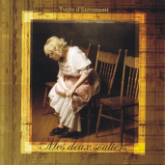
Mes deux souliers - Yvette d'Entremont

Born and raised in a small Acadian village in Nova Scotia, Canada, Yvette was brought up in a rich musical family. Her father, renowned pianist-composer Paul Saulnier and her mother, who would sing her lullabies and teach her Acadian folksongs, provided Yvette with a music-filled environment that would shape, influence, and inspire Yvette to fulfill her dreams as singer, songwriter and recording artist.
Yvette's beautiful songs are always delivered with her soulful and moving performances. She sings about life, love, family and the sea. In addition to Yvette's original songs, her interpretations of Acadian francophone folk songs help enormously to preserve this early North American culture and introduce it to new generations as well.
In addition to several musicals she has directed, Yvette has performed on Canadian TV and radio. Yvette has received numerous awards as a songwriter and recently was nominated for an award by the East Coast Music Association.
Tracks:Partons la mer est belle; LeTemps; Mes deux souliers; Gabriel; La veillee rustique; Ou es-tu?; A la une; Samedi soir; Chere Maman (avec Normand d'Entremont) Hymne a l'amour SODRAC; Nous, tes enfants

Yasemin - Necati Celik

Mr Celik, a frequent guest on Turkish Television as well as a performer at universities throughout the world, teaches oud music to students both at his own school in his native Turkey as well as at workshops in the US. He began his career as an oud musician in 1973 performing in the Mevlevi rituals of Konya, his home province, two years later opening his own school. He is the founder of the Konya Municipal Turkish Music Choir and is currently a member of the Ministry of Culture's State Classic Turkish Music Ensemble in Istanbul.
Tracks: Taksim; Muhayyer Pesrevi; Muhayyer Sazsemaisa; Huseyni Çeçen Kizi; Sadaraban Pesrevi; Sadaraban Sazsemaisa; Nivavend Sazsemaisa; Nikriz Sirto; Hicaz Taksim; Hicaz Pesrevi; Hicaz Sazsemaisa; Hicaz Mandira; Muhayyerkurdi Sazsemaisa; Sultan-i Yegah Sirto; Uzzal Nakis Yürüksemai. 7/8 MUSIC PRODUCTIONS

Tango Sur Trio

Tracks: El Choclo; Felicia; La Cumparsita; Cristal; La Puñalada; De Julio; Duelo Criollo; Grisetta; Barreras de Amor; Loca de Amor; Los Mareados; Sur; La Casita de mis Viejos; Bulin de la Calle Ayaacucho - Artists: Julio Frade; Mario Nuñez; Daniel La Garde

Capoeira-Bahia - Bira Almeida Acordeon

Tracks: Roda de Bamba; Pe da Cruz; Nordeste de Amaralina; Linguica; Ligeiros; Andante; Vadiacao
Capoeira is a Brazilian art form derived from the movements and music of the fights and dances taken to Brazil by Africans from different nations in the fifteenth century. The Jogo de Capoeira (The Capoeira Game) happens when two individuals exchange a continuous barrage of attacks and defenses to the rhythm of unique instruments.

Mestre Acordeon - Eh Capoeira

Tracks: Viva Loremil; E de Bamba; O Meu Pandeiro; Bimba Meu Mestre; Eh Capoeira; Vaquejada; Lembrando Dimola; Cuidado Bezouro; Ladainha de Jogo; Oh Inacio!; Vadia Vadia; Jogo Perigoso

Joga Capoeira E

JOGA CAPOEIRA E - Artists: Mestre Acordeon; Tracks: Disc 1: Cantigas Pra Vadiar - Ligeiros ; Chega Meu Vaqueiro; Viva Louremil; Berimbau de Ouro; Avisa Meu Mano; Dança Guerreira; Jogo Arrepiado; Brincadeira Tem Hora; Força Baiana; Cantando Atravessado; Disc 2: Cantigas Para Ouvir - Pedir o Axé; Pra Biloca dançar; Roda de Bamba; Pé da Cruz; Faca Amolada; O Meu Pandeiro; Um Grito de Liberdade; Lembrando Dimola; Nordeste de Amaralina; Eh Capoeira; Jogo Perigoso; O Inácio; Jogo de Dentro. Mestre Acordeon's greatest capoeira songs put together on a two disc set. Disc one is entitled "Cantigas Pra Vadiar" and is to play capoeira to. Disc two is entitiled "Cantigas Para Ouvir" and is more beautiful capoeira music to play or listen to. (2 CDs price of 1)

Rahman Asadollahi - Traditional Music of Azerbaijan

ANA - Traditional Music of Azerbaijan. Improvisations of contemporary, traditional and folk music of Azerbaijan: Rahman Asadollahi (garmon). Rahman Asadollahi is the world’s premiere garmon (Azerbaijan accordion) player. The eleven tracks here will immerse the listener into the complex and fascinating world of Azerbaijan music and the mugham. Rahman is not only a great garmon player but an accomplished composer, as three tracks on this disc will prove. He has lived in the US since 1999, but has performed all over the western world. 7/8 MUSIC PRODUCTIONS

Aziz Herawi - Cry of the Mountains

Cry of the Mountains. Aziz Herawi. Folk music of Afghanistan. 7/8 MUSIC PRODUCTIONS

Midnight Sun - Traditional Persian Music

MIDNIGHT SUN: Improvisations of Persian Traditional Music: Hossein Behroozi-Nia (barbat); Pejman Hadadi (tombak). Selections: Seed of Light; Epic of Dawn; Prelude to the Sun; Midnight Sun; Rapture; Murmur; Silent Chant. These two masters of their instruments both hail from Iran but now reside in the US. The barbat is a short-necked lute with a pear shaped body. It is a direct predecessor of the European lute. The Tombak is a goblet-shaped drum carved from solid mulberry wood and covered at the wide end with lamb or goat skin. 7/8 MUSIC PRODUCTIONS

Liu Hecheng - Ambush from all Sides

AMBUSH FROM ALL SIDES - Liu Hecheng - Tracks: Ambush from All Sides; The Song of Sai Shang; Dance of Yi; Xu Lai; The Spring of Tian Shan; De Lang Dao Sha; The Rain of Spring; Chen Sui; Sisters of the Grassland. This album is a collection of nin classical and contemporary Pipa solo pieces that represent the true essence of Pipa. In this collection, there are ancient songs that can be traced back 202B.C., as well as contemporary pieces, which exhibit recent, cutting-edge techniques of Pipa. 7/8 MUSIC PRODUCTIONS

Birol Topaloglu - The Best of Heyamo and Aravani

The BEST of HEYAMO & ARAVANI: Birol Topaloglu, et.al. Selections: For Arsima; Nani Nani Oy; Kocari; Heyamo; Love; I Am Going; Little Bride; Crying of the Mother; Melody for the Road; Improvisational Song; helesa Yalesa; Heyaymoli; Song for Tea; There isn't Moonlight Tonight; Little Girl; Aravani; Song for Collard Green; Heyena. Laz are the indigenous people of the southern Caucasus together with the Mingrelians (Christian Laz), Georgians, and the Svans. In Turkey, the Laz population is concentrated on the northeastern Black Sea shore. Their language is called Lazuri and their recorded history dates back to the 4th century B.C.. Today, the language and culture of Laz people are being systematically threatened and assimilated in dominant official cultures. Birol Topaloglu, who performs the vocals here as well as preparing the arrangements and playing kemence, guni and percussion, is one of the foremost folk musicians in Turkey today. On this recording he strives to remind the Laz people, especially the youth, of their rich culture and heritage. 7/8 MUSIC PRODUCTIONS

Ali Akbar Moradi - Fire of Passion

FIRE OF PASSION: Ali Akbar Moradi, tanbur and vocals; Pejman Hadai, Tracks: Songs of Nostalgia; Magham Allahwaisy and Hejrani; Sema of Tanbur; The Caravan; Gallop; etc. 7/8 MUSIC PRODUCTIONS

Maestro Chingiz Sadykhov - Piano Music of Azerbaijan

Maestro Chingiz Sadykhov, piano - Tracks: Arzu (Nlyazi); Sen Menim Men Senin (Tovflk Guliyev); Senden Mene Yar Olmaz (Folk); Gamly Mahny (Tovfik Guliyev); Ala Goz (Sayid Rustemov); Seni Araram (Fikret Amirov); Tut Agaji (Folk); Uja Dag Bashinda (Folk); Iran Mahnysy (Folk); Iran Mahnysy (Folk); Lyric Mahny (Penjereme) (Tovfik Guliyev); Kipriklerin Okhtur (Jihangir Jiliangirov); Ay Gule Batyn (Folk); Galmedin (Sayid Rustemov); Ayrylyk (m:Ali Salimi, w: Farhad Ibrahimi); Esmerim (Folk); Apsheron (Telman Hajiev); Ana (Jihangir Jihangirov); Ilk Bahar (Tovfik Guliyev). 7/8 MUSIC PRODUCTIONS

Avantagan - Chookasian Armenian Concert Ensemble

Tracks: Azg Parabantz; Duduk Solo; Sepastia Haleh/Kochari; Oud Solo; Eetchav Marmand Eereegoon and Dzakhka Sari Gananch Lanjeen; Laz Barr; Bingoel; Santur Solo; Yees Koh Gheemeetun Cheem Keedee; Siroon Manoushag; Tamara; Tarr Solo; Gabooyd trchoon; Sepastia Barr and Bijo Barr
Artists: Chookasian Armenian Concert Ensemble
Traditional songs and dances from Eastern and Western Armenia in live concert recording by Armenian Gold Medal recipients. 7/8 MUSIC PRODUCTIONS


Email Andrew Melzer at andrew@pandadigital.com
© Panda Digital 2000 – 2010